

Purchasing a home is a huge and wonderful step in life. Maybe it is your first ever home or the dream house you have always dreamed of having
Dubai is one of the top destinations to purchase property due to its lovely homes, up-to-date facilities, and secure way of life. Individuals from across the globe come here to invest or reside.
According to Statista, by 2025, the UAE real estate market might reach about US $693.53 billion. Housing can be the biggest part, worth about US $401.81 billion.
Learn how to buy property in Dubai. We explain the steps, how to get money (mortgage), and how to move in easily.
Moreover, if you are an expatriate (foreign national), it’s important to know that property ownership rules in the UAE vary from emirate to emirate. This guide gives a short look at the rules on how to buy property in Dubai so you can compare.
Buying Property in Dubai: Key Requirements
If you’re wondering how to buy property in Dubai for the first time, you will need to prepare the following documents:
- Passport
- Visa
- Proof of income
- Recent bank statements
- No Objection Certificate (NOC) from the developer
- Property details
- Purchase agreement
- Payment details
- Seller’s ID proof
Now, let’s get into what is the process to buy property in Dubai.
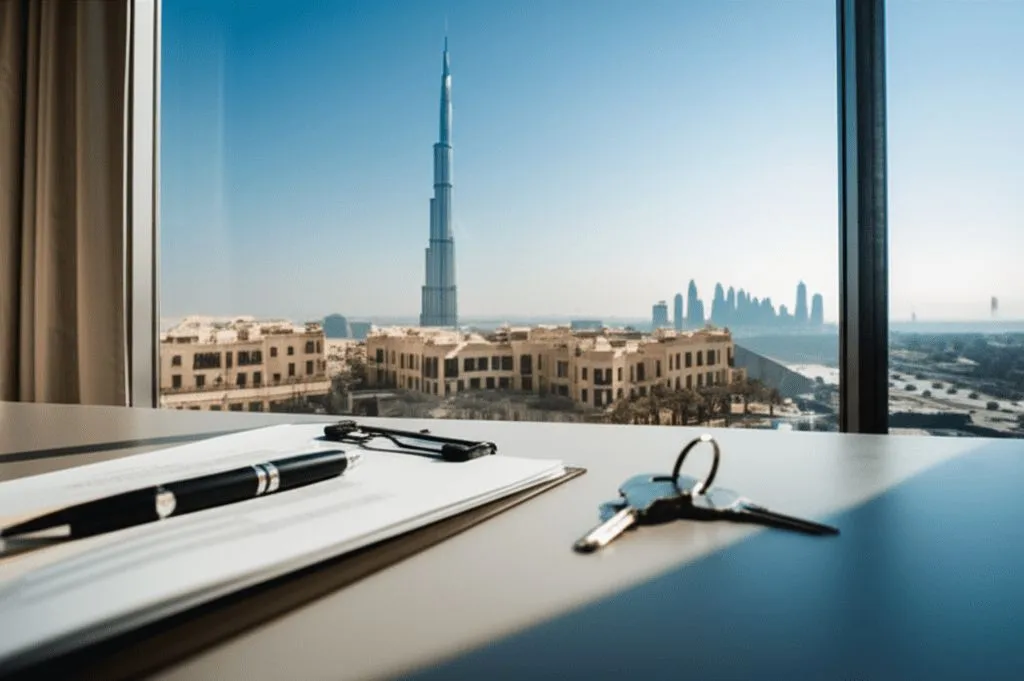
How to Buy a Property in Dubai: Step-by-Step Guide
Here are the 14 steps to buy a home in Dubai
1. Check Your Affordability
- If paying in cash, it’s straightforward.
- If using a mortgage, your borrowing power depends on:
- Income (salary certificate or proof of business earnings)
- Debt Burden Ratio (DBR) and lifestyle expenses
- Down payment (20% minimum for UAE nationals, 25% for expats)
- Credit score (a higher score can mean lower interest rates)
2. Decide on Your Budget
The first step is to decide your budget.
Decide and analyze first:
- Will I pay fully in cash, or will I take a loan (mortgage)?
- Do I have enough money for extra costs like transfer fees, agent fees, and furniture?
Don’t forget to budget an extra 6–7% for fees, taxes, and other expenses. For example, if your property costs AED 1,000,000, keep around AED 60,000 extra for other costs.
3. Start Saving
- If you pay more money upfront, you will need a smaller loan, which makes it easier to get approved and may give you better interest rates.
- Save for extra costs for legal fees, property valuation, transfer fees (4% in Dubai), agent commission, and moving expenses.
4. Get Pre-Approval from the Bank
If you are buying with a mortgage, you must first get pre-approval. This means the bank looks at your income and expenses to decide how much money they can give you as a loan.
- It makes your offer stronger when talking to sellers.
- It saves time because you know your budget clearly.
Speak to a mortgage broker. They deal with multiple banks and can help you find the best offer fast.
5. Find a Good Real Estate Agent
A good agent understands the market and can:
- Find properties that suit what you’re looking for
- Help you get a better price
- Walk you through the legal steps
Choose an agent who:
- Specializes in your chosen area
- Has good reviews or comes recommended
- Is registered with the Dubai Land Department (DLD)
6. Prepare Your Documents
You will need:
- Passport copy
- Visa copy (if you live in UAE)
- Emirates ID copy (if you live in UAE)
- Pre-approval letter (if taking a mortgage)
If you are buying through a company or if you are self-employed, more documents will be required, such as trade licenses or company papers.
7. Choose the Right Location
Dubai has many different communities, each with a unique lifestyle. Here are some of the best properties to buy in Dubai.
- Downtown Dubai: Luxury apartments near Burj Khalifa
- Dubai Marina: Waterfront living with restaurants and nightlife
- Arabian Ranches: Family-friendly villas with parks and schools
- Palm Jumeirah: Iconic beachside living
- Business Bay: Close to offices, good for professionals
Also consider these factors:
- Distance to work or school
- Type of property (apartment, villa, townhouse)
- Facilities you want (gym, pool, park, security)
8. View Properties
With your agent, visit several properties to compare. When viewing, check:
- Size of rooms
- Condition of the property
- View from windows/balcony
- Noise levels
- Parking availability
You can also explore how to buy property in Dubai online for virtual property tours and remote offers.
9. Make an Offer
When you have found the right property:
- Your agent will make an offer to the seller
- If the seller accepts, you must be ready to pay a 10% deposit
10. Apply for Your Mortgage
- Choose between fixed or variable rates.
- Bank will conduct:
- Full credit check (via Al Etihad Credit Bureau)
- Property valuation
- Ensure you have all documents ready to avoid delays.
11. Complete the Legal Work
- Steps vary by emirate.
- In Dubai, you must:
- Sign the MOU with the seller.
The MOU (also called Form F) is a legal agreement between buyer and seller.
It includes:
- Price of the property
- Payment terms
- Date for transfer of ownership
You give the 10% deposit cheque at this stage
- Apply and pay for a No Objection Certificate (NOC) from the developer.
- Meet at the Dubai Land Department to transfer ownership.
- Pay the 4% transfer fee + admin charges.
- Receive your title deed and keys..
12. Hire a Legal Expert
Hire a person who:
- Checks all documents
- Ensures the property is free from debt or legal issues
- Manages the paperwork at the Dubai Land Department
They charge a small fee but save you from costly mistakes.
13. Application for a No Objection Certificate (NOC)
- The buyer, seller, and real estate agent meet at the developer’s office (like Dubai Properties, Emaar, or another developer).
- The purpose is to apply and pay for a No Objection Certificate (NOC), which confirms there are no unpaid fees or issues with the property.
- This step is very important , without the NOC, the Dubai Land Department (DLD) will not transfer the ownership to your name.
14. Initiate Ownership Transfer With DLD
- Once you have the NOC, the last legal step is to go to the Dubai Land Department (DLD) to officially transfer the property to your name.
You will need the following documents at DLD:
- A manager’s check for the agreed price (made out to the seller).
- Original ID documents for both buyer and seller (Emirates ID and passport).
- The original NOC from the developer.
- The signed Contract F
- Once the DLD verifies the data and fees are paid (usually 4% of the purchase price + admin charges), the transfer is processed and a new title deed is issued in the buyer’s name.
- At this point, you are the official legal owner of the property, and you get your title deed and the keys.
Extra Tips for Expats
- Make sure to find out if the property is freehold or leasehold before you decide to buy.
- Verify that the area you are buying in is a designated investment/freehold zone.
- If you buy an off-plan property, check that the developer is registered with the Dubai Land Department (DLD) or your emirate’s authority.
- Always use a registered real estate agent.
Key Fees to Budget For Buying Property in Dubai
According to the finance world, the following costs and budgets should be kept in mind for those who are wondering about how to buy property in Dubai.
| Cost Type | Rate / Amount | Notes |
| Dubai Land Department (DLD) Transfer Fee | 4% of the property price | Mandatory government fee |
| Agent Commission | 2% of the property price (typical) | Paid to the real estate agent |
| Mortgage Registration Fee | 0.25% of loan amount | Charged by the Dubai Land Department for registering a mortgage |
| NOC Fee | AED 500 – AED 5,000 | Varies by developer |
| Property Valuation Fee | AED 2,500 – AED 3,500 | Required for mortgage approval |
| Conveyancing Fee (optional but recommended) | Varies | Paid to a conveyancer/lawyer for managing the legal process |
How to Get a Mortgage in Dubai: 5 Important Tips
- Talk to a mortgage advisor: They will find you the best rates and explain everything clearly.
- Save a deposit: Expats need at least 20% of the property price; UAE citizens need 15%.
- Reduce debts: Clear credit cards or loans before applying.
- Prepare documents: Salary slips, bank statements, and identification.
- Get pre-approved: This proves to sellers that you are a serious buyer.
Rules for Expats to Buy Property in the UAE

Each emirate has its own real estate laws:
Abu Dhabi
Expats can own floors and apartments but not land.
Four main systems:
- Ownership (99 years): Full rights over apartments and villas (no land).
- Musataha (50 years, renewable): Use, build, or change the property.
- Usufruct (99 years): Use the property but cannot change it.
- Long-term lease (25+ years).
Nine areas where foreigners can own: Yas Island, Saadiyat, Reem, Mariya, Lulu, Al Raha Beach, Sayh Al Sedairah, Al Reef, and Masdar City.
2019 amendment: Foreigners can now own properties in “investment areas” with full rights.
If you have a usufruct or musataha right for more than 10 years, you can mortgage or sell the property without needing the landlord’s permission.
What Is the Law Behind Buying a Property in Dubai?
The main law for property ownership in Dubai is Law No. 7 of 2006.
Under this law:
- UAE and GCC nationals can buy property anywhere in Dubai.
- Foreigners can only buy in certain freehold or leasehold areas (you can find the full list on the DLD website).
You can get:
- Freehold ownership: Full rights over the property and land forever.
- Usufruct rights: Right to use the property for up to 99 years, but you can’t make major changes.
- Leasehold rights: Lease for up to 99 years.
Other points to know:
- Both residents and non-residents can buy in these approved areas.
- There is no age limit for owning property.
- The Dubai Land Department (DLD) issues the title deeds.
Freehold Vs Leasehold Ownership: What is the Difference?
With freehold ownership, you fully own both the property and the land it stands on, with no time limit.
With leasehold ownership, you can use the property for a set time (up to 99 years), but after that, it goes back to the freeholder.
Always check if the property is in a designated freehold area before making an offer.
Considerations for Successful Property Purchases in Dubai
- Understanding market trends and price per square foot in desired areas.
- Comparing off-plan vs. ready-to-move properties.
- Service charges and maintenance costs.
- Importance of working with RERA-licensed agents.
- Understanding rental yields and ROI potential.
- Tax implications (no property tax but applicable transaction fees).
- Risks of off-plan projects and how to safeguard investments.
- Currency exchange considerations for overseas buyers
Checklist for Settling Into Your New Property
Before you move in:
- Pack carefully: Label boxes so you know what’s inside.
- Clean the property: Deep clean before placing furniture.
- Hire movers: Choose a trusted moving company.
- Set up utilities: Electricity, water, internet, gas.
- Do repairs: Fix anything before moving furniture.
- Buy furniture: Measure rooms to make sure everything fits.
- Pest control: Especially if the property was empty for a while.
- Change your address: Update banks, bills, and delivery services.
7 Common Mistakes to Avoid When Buying a Home in Dubai
Buying a home in Dubai can be exciting, but it’s easy to make costly mistakes if you’re not careful. Here are some of the most common ones:
1. Not Proper Research About the Developer or Project
Many buyers get swayed by glossy brochures and marketing hype without checking the developer’s track record. Always check out past projects, delivery timelines, and quality before committing.
2. Ignoring Service Charges and Maintenance Fees
The purchase price is not the only cost. In Dubai, service charges can add up significantly. Some luxury projects have higher annual fees that can strain your budget if you’re not prepared.
3. Skipping Legal and Contract Reviews
Some buyers sign sales agreements without having them reviewed by a legal professional. This can lead to misunderstandings about handover dates, payment plans, or refund terms.
4. Ignoring Location and Future Development Plans
A property might look great now but check what is planned for the surrounding area. Upcoming construction could affect your view, traffic, or property value.
5. Underestimating the Buying Timeline
The Dubai property buying process involves paperwork, NOCs, and bank approvals. Rushing without planning can lead to delays or missed opportunities.
6. Not Considering Resale Potential
Even if you are buying for personal use, then check out how easy it will be to sell later. Factors like location, property type, and demand trends matter.
7. Letting Emotions Lead the Purchase
Falling in love with a property without comparing options or negotiating can cost you. Always research market prices and stay objective.
Risks of Buying Property in Dubai
Buying property in Dubai can be exciting and profitable, but there are some important risks you should think about first:
1. Rules and Legal Risks
Dubai has made its property laws stricter lately. New rules mean more paperwork and checks, especially for foreigners. If you do not follow these rules, you could face fines or even lose your money.
Buying property in Dubai for foreigners can be tricky if you don’t understand the laws or work with unlicensed agents.
2. Money and Market Changes
Interest rates are going up because the UAE dirham is linked to the US dollar. Higher rates make borrowing more expensive, so fewer people may buy, and prices might drop.
Experts warn that prices might drop by as much as 15% by the end of 2025, which could leave you owing more than the property’s actual value.
3. Too Many Properties and Low Rent
Dubai keeps building lots of new homes over 25,000 just in early 2025! If too many homes are for sale but not enough people want to rent or buy, prices and rents could fall.
Some buildings have only 30-40% of units occupied, so you might get less rent than expected.
4. Economic and Political Risks
Dubai’s economy depends a lot on real estate and oil. If global markets go down or there is political trouble in the Middle East, property prices and demand might fall fast.
5. Other Challenges for Investors
It can take a long time to sell a property when the market is slow, and you might have to sell for less than you paid.
New environmental rules may mean extra costs to keep your property “green” and attractive to renters.
Also, some parts of the market still depend a lot on quick buying and selling (speculation), which can be risky.
What Experts Say
Many experts believe Dubai’s property market will change but not crash. They advise buyers to do careful research, check that agents are licensed, and get good legal advice.
Knowing the rules and watching market changes will help protect your investment, but remember, risks are higher here than in some other places.
Can Foreigners Buy Property in Dubai with a Mortgage?
Yes, foreigners can buy property in Dubai using a mortgage, even if they are not residents. Leading banks such as Emirates NBD, Mashreq Bank, and HSBC offer mortgage options specifically designed for foreign buyers.
Here are the 7 main points to know:
- Eligibility: Foreigners (both residents and non-residents) can apply, provided they purchase in designated freehold zones. Applicants should typically be 21–65 years old at loan maturity, with a minimum monthly income (for expats, usually 15,000–20,000AED).
- Down Payment: Non-residents generally need a minimum down payment of 25–50% of the property value. The exact requirement depends on the property, your nationality, and the bank’s policies. The loan-to-value (LTV) ratio for non-residents is typically capped between 50–75%.
- Interest Rates: Fixed-rate and variable-rate mortgages are available, with current rates ranging from about 3.5% to 5.5% depending on your profile and the bank. Non-residents may be offered slightly higher rates than residents.
- Loan Tenure: Maximum tenure is usually 15–25 years, but often must be completed before you turn 65–70.
- Documentation: You will need a valid passport, proof of income, 6–12 months of bank statements, a credit report (sometimes from your home country), proof of address, and the down payment.
- Approval Process: Pre-approval is recommended before property hunting. Final approval usually takes 2–4 weeks, and the mortgage must be registered with the Dubai Land Department (DLD)..
- Other Costs: Besides the down payment, budget another 6–7% for fees (Buying property in Dubai Fees, Dubai Land Department, mortgage registration, agent commission, etc.).
How to Buy Property in Dubai Without a Down Payment
Buying property in Dubai with no down payment is extremely rare and generally not possible for most buyers due to government regulations and market practices. Here is what you need to know:
Regulatory Realities
- The Dubai Land Department (DLD) requires expatriate and foreign buyers to pay at least 20% of the property price as a down payment for most purchases
- As of 2025, zero down payment properties are not offered by leading developers or banks and are not available for mortgaged resale (secondary) properties.
Where You Might See Zero Down Payment Offers
- Occasionally, some off-plan developers may market “zero down payment” promotions, misleading about how to buy property in Dubai without a down payment, but these are rare and usually:
- Restricted to select budget projects
- Offered by new or less-established developers with lower demand
- They might have some drawbacks, like higher prices, stricter conditions, or longer delivery times.
Why is Dubai an Excellent Place to Buy Property?
The following reasons make Dubai a great country for real estate investment:
- Modern buildings and world-class architecture
- Luxury lifestyle and high-quality services
- Safe and secure environment
- Tax-free income for most residents
- Strong property market with good returns on investment
FAQs
1. What is the minimum salary to buy a house in Dubai?
In 2026, you usually need a monthly salary of AED 10,000 to AED 15,000 (about USD 2,700 to 4,000) to get a mortgage in Dubai. Most banks use AED 15,000 as the standard requirement for both expats and UAE nationals.
2. What is the Timeframe for Buying a House in Dubai?
It can take 2 to 10 weeks. It’s slower if the home has a bank loan.
3. What is a Title Deed?
Title deed is a document that proves you own the property, and you can use it, sell it, rent it out, or take a loan against it.
4. Can Foreigners Buy Property in Dubai?
Yes, but only in special freehold areas, such as Dubai Marina, Palm Jumeirah, Downtown, Arabian Ranches, and JVC.
5. What is a Trustee Office?
A DLD-approved office that checks papers and helps finish the deal.
6. How to Purchase Off-Plan Property?
- Pick a budget and type
- Check developer and project
- Pay booking fee, sign MoU
- Pick a payment plan
- Get NOC, register, get title deed
- If a mortgage, get bank approval first
- Watch construction, check home before moving in
Wrapping Up
So, that’s the simple breakdown of how to buy property in Dubai. It’s really about getting your budget ready, finding the right place, and making sure all the paperwork is sorted.
Dubai’s property market is still expanding, with plenty of options like a ready home or off-plan property.
Take it step by step, get help from the right people, and before you know it, you could be unlocking the door to your new home in one of the most exciting cities in the world.