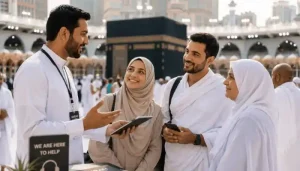

Umrah is a deeply spiritual journey that holds immense significance in a Muslim’s life. While it is not obligatory like Hajj, it is a highly recommended act of worship that brings forgiveness, peace, and closeness to Allah. Millions of Muslims from around the world travel to Makkah every year to perform Umrah, seeking mercy, guidance, and spiritual renewal.
Whether you are traveling from the UAE or elsewhere, understanding the correct method is essential to ensure your worship is accepted.
This blog by Find Any Agent, explains how to perform Umrah correctly, step by step, clearly and practically, making it easy for first-time pilgrims and returning visitors alike. Find Any Agents this step by step Umrah guide explains each ritual clearly, including how to perform Umrah for beginners, Tawaf, Sa’i, and dua recitations.
Planning Your Umrah Journey?
Find trusted Travel agents in the UAE and compare services for a smoother pilgrimage experience.
Understanding Umrah in Islam
The Meaning and Purpose of Umrah
Umrah, often referred to as the lesser pilgrimage, is an act of worship performed in Makkah that includes specific rituals centered around the Kaaba. It is a Sunnah of Prophet Muhammad ﷺ and can be performed at any time of the year.
The purpose of Umrah is spiritual purification. It allows a believer to disconnect from worldly distractions, seek forgiveness for sins, and renew their relationship with Allah. The Prophet ﷺ performed Umrah multiple times in his life, highlighting its importance and reward.
Key Differences Between Hajj and Umrah
| Aspect | Hajj | Umrah |
| Obligation | Mandatory | Voluntary |
| Timing | Dhul Hijjah only | Any time of year |
| Duration | 5–6 days | Few hours |
| Main Rituals | Ihram, Tawaf, Sa’i, Arafat, Mina, Sacrifice | Ihram, Tawaf, Sa’i, Halq/Taqsir |
| Location | Makkah + Arafat + Mina | Makkah only |
Essential Conditions and Requirements for Umrah
Who Is Eligible to Perform Umrah
To perform Umrah, a pilgrim must meet the following conditions:
- Must be Muslim
- Of sound mind
- Physically able to perform the rituals
- Financially capable of covering travel, stay, and expenses for dependents
Physical and Spiritual Preparation
Pilgrims should prepare both physically and spiritually by:
- Ensuring good health and stamina
- Practicing patience and humility
- Following proper Islamic etiquette throughout the journey
- Maintaining a devoted mindset for a fulfilling Umrah experience
How to Prepare for Umrah
Important Preparations Before Umrah
Preparation includes
- learning the rituals
- Understanding Ihram restrictions
- Planning travel logistics.
Many pilgrims prefer to book through an Umrah agent, travel agent, or visa agent to simplify arrangements and ensure compliance with all requirements.
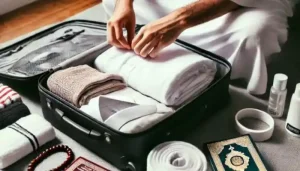
Essential Items to Take for Umrah
Key items include
- Ihram garments,
- Comfortable footwear,
- Unscented toiletries,
- Prayer essentials, medication,
- Valid travel documents.
Packing light but wisely is recommended.
Things to Do Before Leaving Home
Before departure, pilgrims should
- Seek forgiveness from others
- Settle debts,
- Pray two rak’ahs asking Allah for ease and acceptance.
Step 1: Preparing for Ihram & Making Niyaah
Maintaining Physical Purity
Before entering Ihram, pilgrims should perform ghusl (ritual bath) to cleanse their bodies. Nails should be trimmed and unwanted hair removed to maintain physical purity.
Ihram Clothing Guidelines
Men must wear two unstitched white cloths, called Izar and Rida, while women wear modest clothing covering the body except the face and hands. This attire symbolizes simplicity and equality before Allah.
Miqat Locations and Haram Boundaries
Miqat is the designated boundary where pilgrims must enter the state of Ihram. Entering Makkah without Ihram before reaching Miqat is not allowed.
| Miqat Name | Location | Pilgrims |
| Dhul Hulayfah (Abyar Ali) | Near Madinah | For those coming from Madinah and north |
| Juhfah | Near Rabigh, Red Sea coast | For pilgrims from Egypt, Levant, North Africa |
| Qarn al-Manazil (Qarn) | Near Ta’if | For pilgrims from Najd, Eastern regions |
| Yalamlam | Near Tihama region, southwest of Makkah | For pilgrims from Yemen and southern regions |
| Dhat Irq | East of Makkah, near Najd | For pilgrims from Iraq and east |
Rules Related to Miqat
Pilgrims must ensure they are in a state of purity and readiness before crossing the Miqat. Certain actions, like wearing prohibited clothing or using perfume, are forbidden in this zone.
Making Intention at Miqat
The intention (Niyyah) for Umrah must be made before or at the Miqat point. This marks the official start of the pilgrim’s sacred journey.
Dua at Miqat (Intention for Umrah)
Arabic:
اَللَّهُمَّ إِنِّي أُرِيدُ الْعُمْرَةَ فَيَسِّرْهَا لِي وَتَقَبَّلْهَا مِنِّي
Translation:
“O Allah, I intend to perform Umrah. Please make it easy for me and accept it from me.”
Performing Salah al-Ihram
Pilgrims offer two rak’ahs of voluntary prayer before making the intention for Umrah. This prayer helps prepare the heart and mind for the sacred journey.
Reciting the Talbiyah
After making the intention, pilgrims recite the Talbiyah, responding to Allah’s call with devotion. It should be repeated continuously until the Tawaf begins.
Talbiyah (دعاء التلبية)
Arabic:
لَبَّيْكَ اللَّهُمَّ لَبَّيْكَ لَبَّيْكَ لَا شَرِيكَ لَكَ لَبَّيْكَ إِنَّ الْحَمْدَ وَالنِّعْمَةَ لَكَ وَالْمُلْكُ لَا شَرِيكَ لَكَ
Translation:
“Here I am, O Allah, here I am. Here I am, You have no partner, here I am. Verily all praise and blessings are Yours, and all sovereignty. You have no partner.”
Prohibited Actions While in Ihram
While in Ihram, pilgrims must avoid all forbidden acts to maintain the sanctity of their state:
- Perfume or scented products
- Cutting hair or nails
- Marital relations
- Fighting, arguing, or using abusive language
- Hunting or killing animals
- Engaging in trade or worldly disputes
Following these ensures that your Umrah remains valid and spiritually rewarding.
Permissible Acts During Ihram
Pilgrims may perform these allowed acts to maintain comfort and cleanliness:
- Bathing (Ghusl or Wudu)
- Changing Ihram clothes
- Using unscented soap or toiletries
- Performing prayer and dhikr
- Walking, resting, or other daily needs
Step 2: Arrival in Makkah
Virtues of Makkah Mukarramah
Makkah is the holiest city in Islam, where worship brings multiplied rewards. Every action here, even minor acts of devotion, carries immense spiritual benefits.
Entering the Sacred City
Enter Makkah with humility and reverence while maintaining calm, respectful behavior at all times.
Recite the supplication:
Arabic: اللَّهُمَّ صَلِّ عَلَى مُحَمَّدٍ وَعَلَى آلِ مُحَمَّدٍ
Translation: “O Allah, send Your blessings upon Muhammad and his family.”
Entering Masjid al-Haram
Enter with the right foot first, as Sunnah and recite the supplication:
Arabic: وَسَلَّمْتَ عَلَيْه
Translation: “In the name of Allah, blessings and peace be upon the Messenger of Allah.”
The First View of the Kaaba
Upon seeing the Kaaba, make a heartfelt personal dua. An example of the most commonly recited dua is:
Arabic: رَبَّنَا آتِنَا فِي الدُّنْيَا حَسَنَةً وَفِي الآخِرَةِ حَسَنَةً وَقِنَا عَذَابَ النَّارِ
Translation: “Our Lord, grant us goodness in this world and in the Hereafter, and save us from the punishment of the Fire.”
Step 3: Performing Tawaf
Preparing Yourself for Tawaf
Before beginning the 7 rounds of your tawaf, ensure your Wudu is valid and all the Ihram rules are observed. Begin at the Black Stone, keeping the Kaaba on your left. Make the intention (Niyyah) silently.
Arabic: لَبَّيْكَ اللَّهُمَّ عُمْرَةً
Translation: “O Allah, here I am to perform Umrah.”
Starting Point and Istilam of the Hajar al-Aswad
Position yourself, keeping the black stone at your left. It is marked by a green lamp to your right for further ease. Place yourself in line with both.
If possible, touch or kiss the Black Stone. Otherwise, gesture towards it while reciting:
Arabic: بِسْمِ اللَّهِ وَاللَّهُ أَكْبَرُ
Translation: “In the name of Allah, Allah is the Greatest.”
Raml for Male Pilgrims
Begin circumbulating the Kaabas while reciting any duas and making dhikar.
Men walk briskly in the first three circuits if possible, and women continue at a normal pace for all 7 circuits.
Dhikr and Duas During Tawaf
There is no fixed formula. You can recite Qur’an, personal duas, or make dhikr as you wish. Stay humbled and focused.
It is preferred to begin with praise of Allah, followed by sending salawat on the Prophet saww. And then you may make any duas you want.
Supplication at Rukn al-Yamani
Rukn al-Yamani is the corner of the Kaaba opposite the Black Stone. It is marked by a verticle gold border on the Kiswah placed above it.
It holds special significance in Islamic tradition. While touching or gesturing toward it is not obligatory, performing a Sunnah supplication is recommended here. The supplication is to be recited until reaching the Black Stone.
Arabic:
رَبَّنَا آتِنَا فِي الدُّنْيَا حَسَنَةً وَفِي الآخِرَةِ حَسَنَةً وَقِنَا عَذَابَ النَّارِ
Translation:
“Our Lord, grant us goodness in this world and in the Hereafter, and protect us from the punishment of the Fire.”
Completing the Seven Circuits
Tawaf consists of walking seven full rounds around the Kaaba, which is a central act of Umrah. Each circuit is a moment for reflection, devotion, and making heartfelt supplications.
- Walk seven rounds counterclockwise, keeping the Kaaba on your left.
- Start each circuit at the Black Stone (Hajar al-Aswad); touch or gesture toward it while making dua.
- Recite personal supplications, Qur’an verses, or dhikr during each round.
Performing Salah After Tawaf
After completing Tawaf, offer two rak’ahs of voluntary prayer near Maqam Ibrahim if space allows. If the area is crowded, you may pray anywhere within Masjid al-Haram, maintaining focus and devotion in your salah.
Drinking Zamzam Water
After completing Tawaf, pilgrims are encouraged to drink Zamzam water facing the Kaaba while making heartfelt supplications.
This blessed water is a source of spiritual and physical blessings, and drinking it with intention brings barakah. The recommended dua while drinking zamzam is:
Arabic:
اللَّهُمَّ اجعلها شفاءً لنا وبارك لنا فيها وتقبل منا عمرتنا
Translation:
“O Allah, make this water a source of healing for us, bless it for us, and accept our Umrah.”
Drink slowly and mindfully, reflecting on your prayers and intentions. You may also make personal duas for yourself, family, and loved ones while drinking.
Step 4: Performing Sa’i
Sa’i is an essential part of Umrah that commemorates the struggle of Bibi Hajra (AS) as she searched for water for her son, Prophet Ismail (AS).
It involves walking seven trips between the hills of Safa and Marwa, combining physical effort with spiritual reflection and supplication.
Waking to Safa:
While walking toward the hill of Saffa, face the Kaaba and recite:
ِ
إِنَّ الصَّفَا وَالْمَرْوَةَ مِنْ شَعَائِرِ الله ❁ ۖ فَمَنْ حَجَّ الْبَيْتَ أَوِ اعْتَمَرَ فَلَا جُنَاحَ عَلَيْهِ أَن يَطَّوَّفَ بِهِمَا ۚ وَمَن تَطَوَّعَ خَيْرًا فَإِنَّ اللهَ شَاكِرٌ عَلِيمٌ ❁
Indeed, Safa and Marwa are among the symbols of Allah. So whoever makes Hajj to the House or performs Umrah – there is no blame upon him for walking between them. And whoever volunteers good – then indeed, Allah is appreciative and Knowing.
Thereafter, recite the following du’a:
أَبْدَأُ بِمَا بَدَأَ اللهُ بِهِ ❁
I begin with that which Allah has begun with.
These supplications should only be recited once before Sa’i and not at the start of each lap.
Dua at Saffa
Once you reach the hill of Saffa, face towards the Kaaba and raise your hands for making dua. It is sunnah to recite the following du’a:
اللّٰهُ أَكْبَرُ ❁ اللّٰهُ أَكْبَرُ ❁ اللّٰهُ أَكْبَرُ ❁ وَلِلّٰهِ الْحَمْدُ ❁
Allah is the Greatest; Allah is the Greatest; Allah is the Greatest, and to Allah belongs all praise.
لَآ إِلٰهَ إِلَّا اللّٰهُ وَحْدَهُ لاَ شَرِيكَ لَهُ ❁ لَهُ الْمُلْكُ وَلَهُ الْحَمْدُ ❁ يُحْيِي وَيُمِيتُ ❁ وَهُوَ عَلَى كُلِّ شَيْءٍ قَدِيرٌ ❁
There is no deity except Allah, alone without a partner. To Him belongs the Dominion, and to Him belongs all praise. He gives life and death, and He has power over everything.
لَآ إِلٰهَ إِلَّا اللّٰهُ وَحْدَهُ ❁ اَنْجَزَ وَعْدَهُ وَنَصَرَ عَبْدَهُ وَهَزَمَ اَلْأَحْزَابَ وَحْدَهُ ❁
There is no deity except Allah alone. He fulfilled His promise, supported His slave and defeated the Confederates alone.
After reciting this du’a, you may recite your own supplications. Read the du’a a total of three times, making your own supplications in between each time, as was the sunnah of the Prophet ﷺ.
Walking to Marwa:
From Safa, begin walking toward Marwa. Along the path, you will notice two green lights about 50 meters apart, marking the distance that Bibi Hajra (AS) ran in search of water.
These markers are called Milayn al-Akhdharayn (the two green mileposts). It is Sunnah for men to jog lightly between these markers, while women should maintain a normal walking pace.
Making Dua at Safa and Marwa:
There is no recommended of farz dua to recite while walking between Saffa and Marwa. At each hill, recite personal supplications or dhikr.
Make Du’a at Marwa
Once you reach the end of the hill of Marwa, again face the Kaaba, raise your hands to make dua and repeat the same duas thrice, as you recited at the start of Saffa.
اللّٰهُ أَكْبَرُ ❁ اللّٰهُ أَكْبَرُ ❁ اللّٰهُ أَكْبَرُ ❁ وَلِلّٰهِ الْحَمْدُ ❁
Allah is the Greatest; Allah is the Greatest; Allah is the Greatest, and to Allah belongs all praise.
لَآ إِلٰهَ إِلَّا اللّٰهُ وَحْدَهُ لاَ شَرِيكَ لَهُ ❁ لَهُ الْمُلْكُ وَلَهُ الْحَمْدُ ❁ يُحْيِي وَيُمِيتُ ❁ وَهُوَ عَلَى كُلِّ شَيْءٍ قَدِيرٌ ❁
There is no deity except Allah, alone without a partner. To Him belongs the Dominion, and to Him belongs all praise. He gives life and death, and He has power over everything.
لَآ إِلٰهَ إِلَّا اللّٰهُ وَحْدَهُ ❁ اَنْجَزَ وَعْدَهُ وَنَصَرَ عَبْدَهُ وَهَزَمَ اَلْأَحْزَابَ وَحْدَهُ ❁
There is no deity except Allah alone. He fulfilled His promise, supported His slave and defeated the Confederates alone.
This completes one lap of Sa’i. Returning to Safa is considered a second lap.
Completing Seven Rounds:
Continue back and forth between Safa and Marwa until seven trips are completed. Keep your heart focused on Allah and avoid distractions. The following table explains the start and ending points for the 7 rounds of Saffa and Marwa.
| Lap | Start Point | End Point |
| 1 | Safa | Marwa |
| 2 | Marwa | Safa |
| 3 | Safa | Marwa |
| 4 | Marwa | Safa |
| 5 | Safa | Marwa |
| 6 | Marwa | Safa |
| 7 | Safa | Marwa |
Dua and Salah After Sa’i:
After completing Sa’i, it is highly recommended to offer a final heartfelt dua and pray two rak’ahs of nafl salah anywhere within Masjid al-Haram if space permits. This concludes the Sa’i ritual and allows you to thank Allah for accepting your efforts.
Dua When Leaving Masjid al-Haram
When exiting Masjid al-Haram, it is recommended to recite a supplication asking for blessings and acceptance of your worship. This is a moment to seek Allah’s protection, forgiveness, and continued guidance as you leave the sacred space.
بِسْمِ اللهِ وَالصَّلَاةُ وَالسَّلَّامُ عَلَى رَسُولِ اللهِ ❁ اللّٰهُمَّ إِنِّي أَسْأَلُكَ مِنْ فَضْلِكَ ❁
In the name of Allah, and peace and blessings be upon the Messenger of Allah. O Allah, I ask of you from Your bounty.
Recite this dua sincerely while walking calmly out of the mosque. It is also recommended to turn slightly towards the Kaaba as you leave.
Step 5: Halq or Taqsir
Shaving or Trimming the Hair:
- Men: Shave the head completely (Halq) or trim the hair (Taqsir) to mark the completion of Umrah.
- Women: Trim a small portion of hair, about the length of a fingertip.
Completion of Umrah Rituals:
Once Halq or Taqsir is done, all Ihram restrictions are lifted. You have now successfully completed your Umrah. Change into comfortable clothing, offer gratitude to Allah, and reflect on the spiritual rewards of your journey.
Important Tips to Know for Umrah for the First Time
For those performing Umrah for the first time, the experience can be both overwhelming and awe-inspiring. Understanding the sacred areas around the Kaaba, the etiquettes, and spiritual significance of different spots will help pilgrims navigate the Haram with confidence and reverence.
For the most up-to-date and official rules on Umrah rituals, eligibility, and Miqat locations, refer to the Official Hajj & Umrah Guidelines from the Saudi Ministry of Hajj.
Understanding the Kaaba
The Kaaba itself is at the heart of Makkah, and first-time visitors should take note of its key sections and their importance:
- Hatim (Hijr Ismail): This semi-circular area adjoining the Kaaba is considered part of the Kaaba’s original structure.
- Multazam:This is the area between the Black Stone and the door of the Kaaba. Pilgrims are encouraged to place their hands on the wall and make heartfelt supplications here.
- Corners of the Kaaba:
- Black Stone Corner (Rukn al-Aswad): Pilgrims traditionally try to kiss, touch, or point toward the Black Stone during Tawaf. It is a Sunnah act, but due to crowds, first-timers can simply gesture toward it respectfully.
- Rukn al-Yamani (Yemeni Corner): Pilgrims often touch this corner during Tawaf. It holds special significance because the Prophet ﷺ recommended touching it if possible.
- Other Corners (Rukn al-Shami and Rukn al-Iraqi): While not associated with specific actions, maintaining awareness of these corners helps pilgrims orient themselves and follow proper Tawaf etiquette.
- Walls of the Kaaba: The walls are made of marble and granite and are the closest point to Allah for pilgrims during Tawaf. Many first-time visitors are drawn to touch or lean gently against the walls to pray, especially during quieter times. It is important to approach respectfully and avoid disrupting others’ worship.
Additional tips for first-time pilgrims:
- Observe crowd flow: During peak times, moving slowly and patiently is essential to avoid accidents and ensure spiritual focus.
- Seek quiet corners: While everyone wants to be near the Black Stone, finding a slightly less crowded area for dua and reflection can enhance concentration.
- Understand the significance of each spot: Every corner and section has its spiritual meaning, and knowing this will deepen the Umrah experience.
- Respect others’ space: The Haram is a communal place of worship; maintaining patience and kindness is part of the pilgrimage etiquette.
By familiarizing yourself with these sacred spots and their significance, first-time pilgrims can approach the Kaaba with reverence, confidence, and clarity, making their Umrah experience truly unforgettable.
How to Perform Umrah for Women vs Men
| Aspect | Men | Women |
| Ihram Clothing | Two unstitched white cloths (Izar & Rida) | Modest stitched clothing; face and hands uncovered |
| Talbiyah | Recited loudly | Recited softly |
| Tawaf Pace (Raml) | Brisk walk in the first 3 rounds | Normal walking pace |
| Sa’i (Green Lights) | Light jogging between green markers | Walk normally |
| Hair After Umrah | Shave (Halq) or trim (Taqsir) | Trim fingertip length only |
| Head Covering | The head must remain uncovered | The head must be covered |
| Mahram Requirement | Not required | Depends on visa rules & scholar opinion |
| Overall Rituals | Same core rituals as women | Same core rituals as men |
This section details how to perform Umrah for ladies step by step, from Ihram clothing, Talbiyah, Tawaf pace, Sa’i, and hair trimming after Umrah.
How Much Time Does Umrah Take?
Average Duration of Umrah
The time required to complete Umrah can vary depending on several factors, but the core rituals of Umrah are usually completed within a few hours. Most pilgrims are able to perform Umrah comfortably in a single session, while others may take longer based on crowd conditions, health, and personal pace. Understanding the time involved helps pilgrims plan their journey better and perform the rituals with ease and focus.
On average, the actual performance of Umrah takes between 3 to 6 hours.
Factors That Can Affect Umrah Timing
- Crowd density: Peak seasons like Ramadan and school holidays significantly increase the time.
- Time of day: Early mornings and late nights are usually less crowded.
- Physical stamina: Elderly pilgrims or those with health issues may require more breaks.
- First-time pilgrims: Additional time may be needed for orientation and guidance.
- Use of wheelchairs: Tawaf and Sa’i may take longer when using assistance services.
Important Duas for Umrah
Although most duas to be recited during umrah are given above, a few of the other important prayers are given below.
Dua for Traveling
Before beginning your journey, recite this Sunnah dua asking Allah for ease and safety.
Arabic:
سُبْحَانَ الَّذِي سَخَّرَ لَنَا هَذَا وَمَا كُنَّا لَهُ مُقْرِنِينَ، وَإِنَّا إِلَىٰ رَبِّنَا لَمُنقَلِبُونَ
Translation:
“Glory be to Him who has subjected this to us, and we could not have done so on our own. And surely to our Lord we shall return.”
Dua When Boarding Transport
This dua is recited when boarding a vehicle, plane, or bus for Umrah.
Arabic:
اللَّهُمَّ إِنَّا نَسْأَلُكَ فِي سَفَرِنَا هَذَا الْبِرَّ وَالتَّقْوَىٰ، وَمِنَ الْعَمَلِ مَا تَرْضَىٰ
Translation:
“O Allah, we ask You during this journey for righteousness, piety, and deeds that please You.”
Dua Upon Arrival in Makkah
Upon reaching Makkah, pilgrims seek acceptance and blessings.
Arabic:
اللَّهُمَّ زِدْ هَذَا الْبَيْتَ تَشْرِيفًا وَتَعْظِيمًا وَمَهَابَةً، وَزِدْ مَنْ شَرَّفَهُ وَعَظَّمَهُ مِمَّنْ حَجَّهُ أَوِ اعْتَمَرَهُ تَشْرِيفًا وَتَعْظِيمًا وَبِرًّا
Translation:
“O Allah, increase this House in honor, dignity, and reverence, and increase those who honor it by performing Hajj or Umrah in honor, righteousness, and reward.”
Sunnah Practices During Umrah
- Making the Niyyah at Miqat – Form the intention for Umrah before crossing the Miqat, as this marks the official start of the sacred journey.
- Reciting the Talbiyah Frequently – Continue reciting “Labbayk Allahumma Labbayk” from Miqat until the start of Tawaf to affirm devotion and obedience to Allah.
- Entering Masjid al-Haram with the Right Foot – Enter the Sacred Mosque humbly with the right foot first while reciting the prescribed Sunnah supplication.
- Beginning Tawaf from Hajar al-Aswad – Start each circuit of Tawaf from the Black Stone, keeping the Kaaba on the left side at all times.
- Raml During the First Three Rounds – Male pilgrims walk briskly in the first three rounds of Tawaf to follow the practice of the Prophet ﷺ.
- Reciting Sunnah Dua at Rukn al-Yamani – Between Rukn al-Yamani and Hajar al-Aswad, recite the well-known Sunnah supplication for worldly and eternal good.
- Offering Two Rak‘ahs After Tawaf – Pray two rak‘ahs behind Maqam Ibrahim if possible, or anywhere within Masjid al-Haram when crowded.
Performing Umrah on Behalf of Another Person
Performing Umrah on behalf of another person, known as Badal Umrah, is a permissible and rewarding act in Islam when specific conditions are met.
It is usually performed for someone who has passed away or is physically unable to undertake the journey themselves due to permanent illness or old age. The intention behind Badal Umrah must be sincere, purely for the sake of Allah, and clearly made on behalf of the individual concerned.
Conditions for Performing Badal Umrah include:
- The Umrah may be performed on behalf of a deceased person who did not perform Umrah in their lifetime.
- It is allowed for a living person who is permanently ill, elderly, or physically incapable of traveling.
- The pilgrim performing Badal Umrah must have already completed their own Umrah.
- A clear intention must be made at Miqat specifying the person on whose behalf the Umrah is being performed.
- Badal Umrah should be performed with the same care, sincerity, and adherence to Sunnah as one’s own Umrah.
The reward of Badal Umrah reaches the person for whom it is performed, while the one performing it also gains immense spiritual benefit for their effort and sincerity.
Visiting Madinah During an Umrah Trip
Visiting Madinah Munawwarah during an Umrah journey is a deeply spiritual experience, though it is not a mandatory part of Umrah. Madinah is the blessed city of the Prophet Muhammad ﷺ, a place filled with mercy, peace, and immense spiritual rewards.
The Prophet ﷺ loved this city, made du‘a for it, and encouraged Muslims to visit it with sincerity and respect.
Virtues of Madinah Munawwarah:
Madinah holds a unique status in Islam as the city where Islam flourished and where the Prophet ﷺ is buried.
Acts of worship here carry great virtue, and the city is described as a sanctuary of faith and tranquility.
Etiquette While Visiting Madina
Visitors should maintain humility, observe proper Islamic manners, dress modestly, and engage in worship, remembrance, and sending salutations upon the Prophet ﷺ.
Importance of Visiting Masjid an-Nabawi:
Praying in Masjid an-Nabawi brings immense reward, as one prayer there is better than a thousand prayers offered elsewhere, except in Masjid al-Haram.
Important Islamic Sites to Visit While on Umrah
| Islamic Site | Location | Religious & Historical Significance |
| Jabal al-Nour | North-east of Makkah | The mountain that houses Cave Hira, where the first revelation of the Qur’an was sent to Prophet Muhammad ﷺ. |
| Cave of Hira | Jabal al-Nour | A place of deep reflection where the Prophet ﷺ received the first verses of Surah Al-‘Alaq. |
| Jabal Thawr | South of Makkah | Contains the cave where the Prophet ﷺ and Abu Bakr (RA) sought refuge during the migration to Madinah. |
| Cave of Thawr | Jabal Thawr | A historically significant site symbolizing trust in Allah during the Hijrah. |
| Masjid Aisha (Tan‘eem) | North of Makkah | A Miqat location for pilgrims who wish to enter Ihram for Umrah while staying in Makkah. |
| Jannat al-Mu‘alla | Makkah | A historic cemetery where several family members of the Prophet ﷺ are buried. |
Maximizing the Rewards of Umrah
To maximize the blessings of Umrah, maintain sincerity in worship and avoid actions that distance you from Allah. Engage in regular dhikr, follow Sunnah practices, and encourage family and community in good deeds.
Consistent reflection, dua, and spiritual mindfulness ensure that the purification and rewards of Umrah have a lasting effect on your life.
Keeping the Spirit of Umrah Alive After Return
After completing Umrah, the journey of the heart continues. Pilgrims should maintain regular prayers, read and reflect on the Qur’an, and uphold humility, patience, and gratitude in daily life.
Continuing acts of kindness, charity, and remembrance of Allah helps preserve the spiritual connection established during Umrah.
Umrah as a Journey of Faith
Umrah transforms hearts and strengthens faith. Whether you are traveling from the UAE, looking for an Umrah package from Sharjah or anywhere else in Dubai, or arranging your trip independently, understanding the correct method is essential to ensure your worship is accepted.
This comprehensive guide on how to perform Umrah is designed to help you worship with confidence, clarity, and peace. May Allah accept your Umrah, forgive your sins, and allow you to return spiritually renewed.
May your journey be blessed and your duas answered. Ameen.
Looking for Trusted Travel Agencies in the UAE?
Explore trusted Travel agencies in the UAE and find a provider that suits your pilgrimage needs.